
Busan Summer Travel Tips: Humidity, Rain and Typhoons
Busan summer travel tips for July–August: how to handle humidity, the rainy season, beach days and typhoon season, plus a practical packing list.
The short answer: plan for wet heat, not just hot weather
July and August in Busan are hot, sticky and sometimes very rainy. The first half of July usually sits inside the East Asian rainy season (Koreans call it jangma), which means grey skies, heavy downpours and humidity that makes a 30-degree day feel much worse. Late July into August tends to be drier and brighter, and that is when the beaches fill up. Typhoons can show up from roughly July through September, so a flexible plan matters more here than a perfect one.
If you remember only a few things: pack quick-dry clothes, carry a compact umbrella every day, treat beach days as weather-dependent, and build one or two indoor backup days into your itinerary. Check the forecast every morning, because Busan's summer weather changes quickly. Everything below explains how to do that without turning your trip into a stress test.
How July and August actually differ
Early to mid July: rain season
Expect rain on many days, sometimes in short, heavy bursts and sometimes in long drizzly stretches. It is not constant, though. You will often get a few hours of dry weather, so the trick is to keep your plan loose. Do outdoor things when the sky opens up and move indoors when it doesn't.
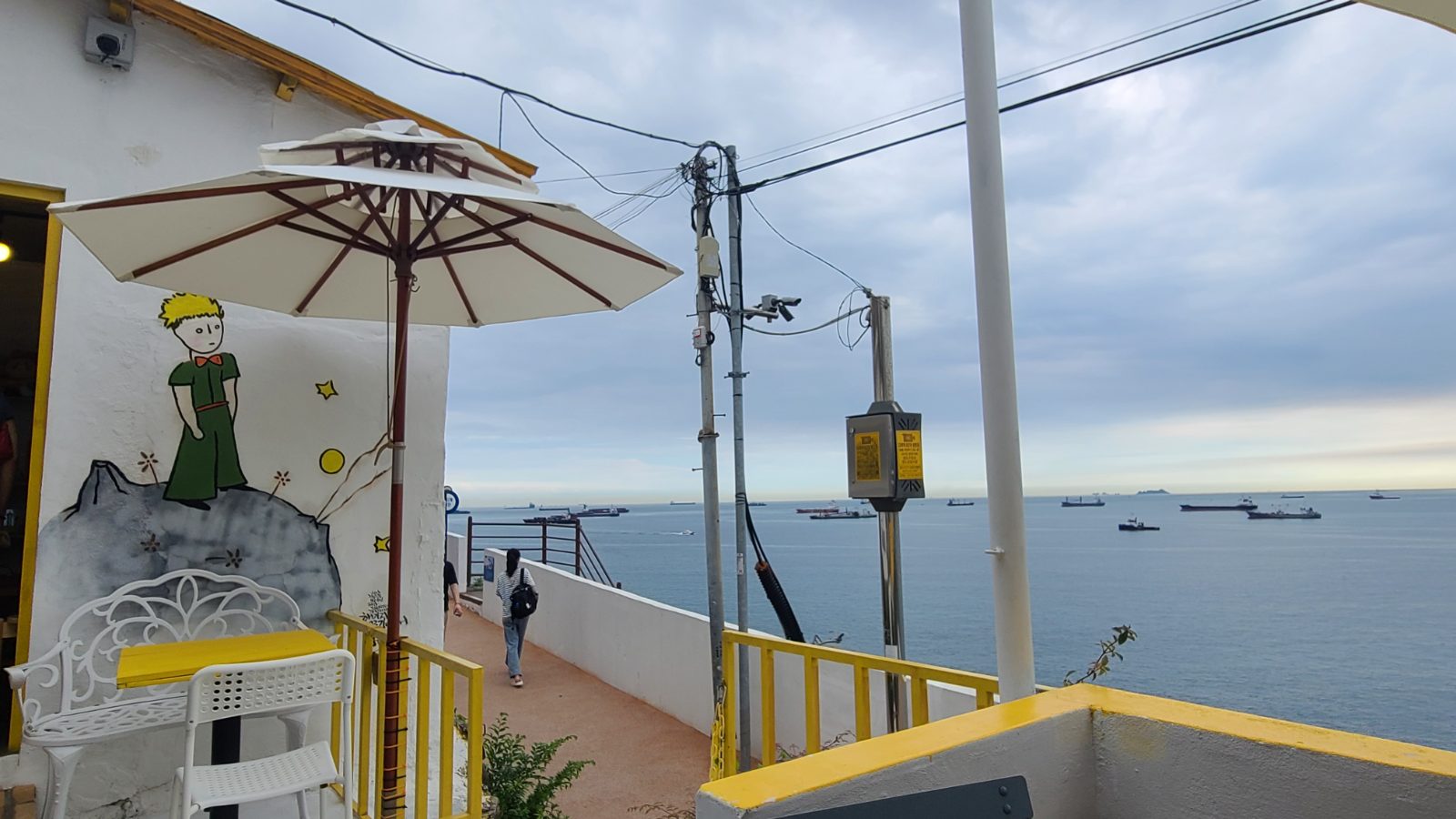
The upside: fewer crowds at some sights, lush green hills, and a good excuse to spend an afternoon in a café or market. The downside: the views from places like Taejongdae or the Gamcheon hillside can disappear into cloud, and wet steps and slopes get slippery.
Late July to mid August: peak heat and beach season
This is the stretch most people picture when they think of a Busan summer: bright sun, crowded sand, long evenings along the water. It is also when heat and humidity are most draining. Midday is hard work for sightseeing on foot, so shift your schedule. Do walking and sightseeing in the morning, rest or go indoors in the early afternoon, and come back out for the beach or a waterfront walk later in the day.
Late August: the typhoon-watch zone
Typhoons do not hit Busan every year, but the city is on the south-east coast and does get affected. The risk rises as summer turns toward early autumn. You do not need to cancel a trip over this, but you do need a plan B, which I cover below.
What to pack for Busan in summer
The goal is clothes that dry fast and don't cling. Cotton jeans are a mistake here: they get damp in the air and take forever to dry.
| Item | Why it helps |
|---|---|
| Quick-dry tops and shorts or light trousers | You will sweat, and you may get rained on. Synthetic or linen blends dry overnight. |
| A compact umbrella | Works for both rain and strong sun. Convenience stores sell cheap ones if you forget, but having your own saves you a stop. |
| Sandals with a grip, plus one pair of closed shoes | Wet pavement and tiled station floors are slippery. Closed shoes are for hillside neighborhoods and rainy days. |
| A thin layer | Subways, cafés, malls and buses often run strong air conditioning. A light shirt or cardigan helps. |
| Sunscreen, hat, sunglasses | Even cloudy days can burn you at the beach. Reapply after swimming. |
| Waterproof phone pouch or small dry bag | Protects your phone, cards and passport copy from rain and splashes. |
| Small quick-dry towel | Useful at the beach and for wiping off after a sudden downpour. |
| Power bank | Maps and translation apps drain your battery faster in the heat. |
| Insect repellent | Mosquitoes are more active in wet weather, especially near parks and hillsides in the evening. |
| Reusable water bottle | You will drink more than you expect. Water and cold drinks are easy to find, but a bottle keeps you hydrated between stops. |
Pack light and plan to wash clothes mid-trip. In humid weather, a small load of laundry halfway through your stay beats carrying a bag of damp clothes. Many guesthouses have a laundry room, so ask when you book. Hang clothes where air moves, since humidity slows drying.
Dealing with humidity day to day
- Start early. Mornings are noticeably more comfortable for hillside areas like Gamcheon Culture Village, or for walking around the Nampo and Jagalchi area.
- Use the subway as a cool-down. Stations and trains are air-conditioned. Hopping from stop to stop is a legitimate strategy between outdoor sights.
- Plan a midday break. Go back to your room, nap, or sit in a café. This is when many locals disappear too.
- Drink water, and eat something salty. If you feel dizzy or headachy, stop, find shade or an air-conditioned place, and rest.
- Try Korean summer food. Cold noodles (naengmyeon), Busan's own milk-based wheat noodle dish milmyeon, shaved-ice dessert (patbingsu) and chilled corn or barley tea are all summer staples for a reason.
Beach season: how to enjoy it
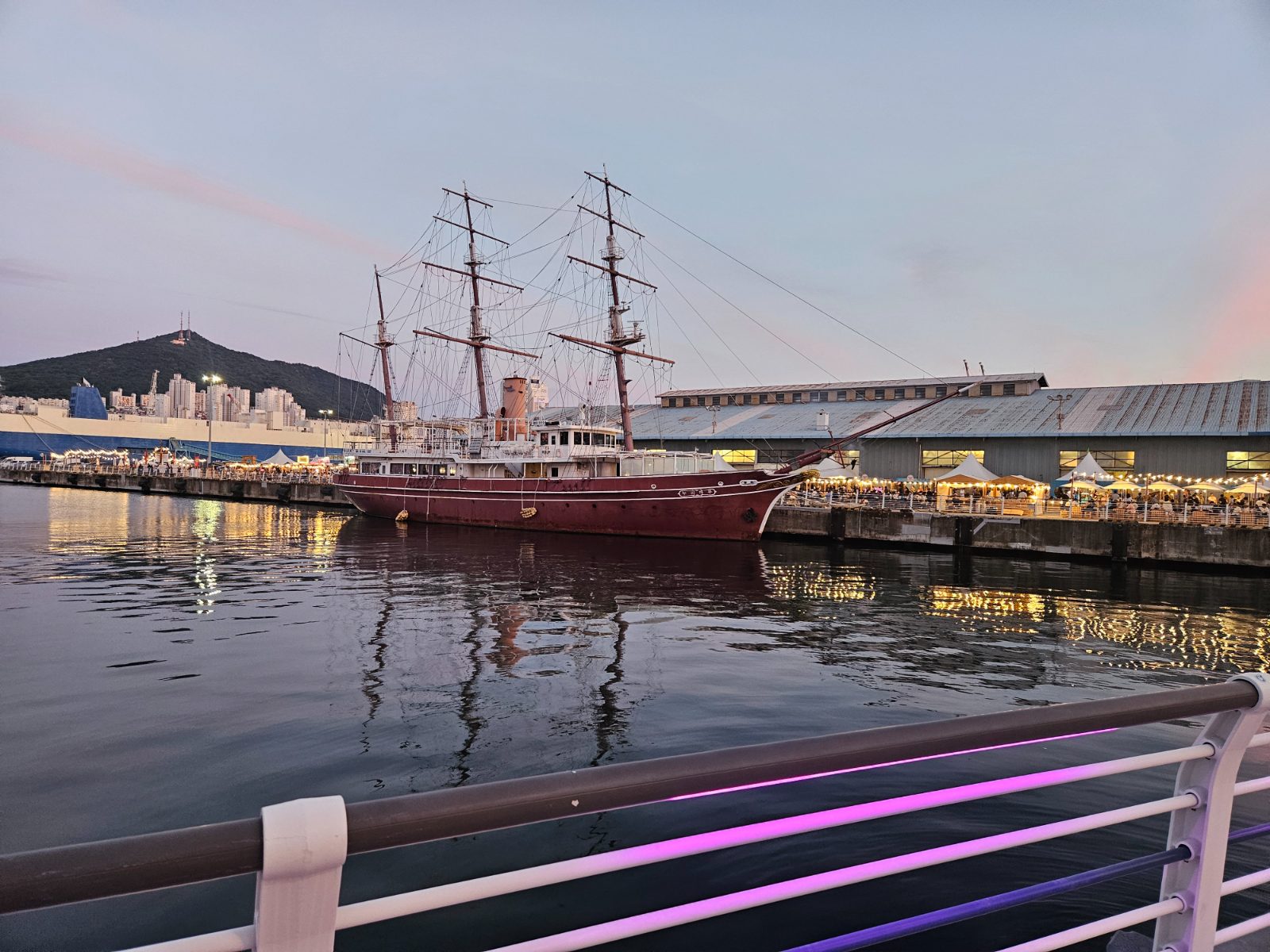
Busan's main beaches, including Haeundae, Gwangalli, Songjeong and Songdo, officially open for the summer season, usually starting in July and running through August. Exact opening dates and lifeguard hours change from year to year, so check the local district notices before you go.
A few practical points:
- Swim in the marked zone. Beaches typically have designated swimming areas and flags. Follow lifeguard instructions, and if the water is closed, stay out. Rip currents and sudden swells are real, especially after rain or a distant typhoon.
- Haeundae is the busiest. It is the easiest to reach (Line 2) and the most crowded on summer weekends. For a calmer feel, try Songjeong, which is reached from the Donghae Line, or go early on a weekday.
- Gwangalli is a good evening beach. The Gwangandaegyo Bridge lights up at night, and the beachfront has cafés and bars. Many travelers prefer it for sunset rather than a long swimming day.
- Check costs for rentals. Umbrellas, loungers and tubes are often rented on-site. Prices vary, so confirm before you pay.
- Keep valuables minimal. Bring only what you need, plus a waterproof pouch for your phone.
Typhoon awareness: what to do
A typhoon does not mean the whole summer is ruined. Usually you get a few days of warning, a day or two of strong wind and rain, and then clear skies. Here is a calm way to handle it.
Before you travel
- Book transport and stays with a clear cancellation or change policy. The policy for each stay is shown on its listing, so read it before you pay. Consider travel insurance that covers weather disruption.
- Leave a buffer day if you have an onward flight, a ferry or a connection on a tight schedule. Flights, ferries (including those to Japan) and sometimes trains can be delayed or cancelled when a storm approaches.
While you are in Busan
- Check the Korea Meteorological Administration (KMA) forecast and a local map or weather app each day. Also keep an eye on official alerts on your phone. Korean emergency alerts arrive as text messages, so ask your host or a local to translate if one pops up.
- Stay away from the shoreline, piers and seawalls when the storm is near, even if the sea looks fine from a distance. Big waves can come in suddenly.
- Do not climb hillsides or walk along cliff paths in strong wind or heavy rain.
- Stock up on water, snacks and a charged phone beforehand. Convenience stores are everywhere, but can run low on some items right before a storm.
- Follow the guidance of your accommodation. Staff can tell you when it is safe to go out and which services are running.
If you are wondering where to spend a stuck-indoors day, Busan has plenty: the large malls and spas around Centum City, the covered shopping streets and underground arcades near Seomyeon, the cinemas and cafés around BIFF Square, and quiet bookstores and cafés scattered across the city. Pick one or two ahead of time so you are not scrolling in a panic when the rain starts.
A flexible July–August itinerary
- Day 1: Seomyeon and nearby. Easy first day. Food, underground shopping and nightlife are all close together, and you are under cover if it rains.
- Day 2: Nampo, Jagalchi and Gamcheon. Go early, finish the hillside before the heat peaks, and spend the afternoon in Nampo's covered market streets and cafés.
- Day 3: Weather-decided. If it is clear, go to Haeundae or Songjeong for the beach, or Taejongdae in the morning. If it is wet, make it a Centum City, museum or café day.
- Day 4: Gwangalli at sunset. Rest in the afternoon, then walk the beach and watch the bridge lights come on.
- Day 5: Buffer. Leave this open for whichever plan got rained out, or add a day trip if the forecast is good.
Where to base yourself
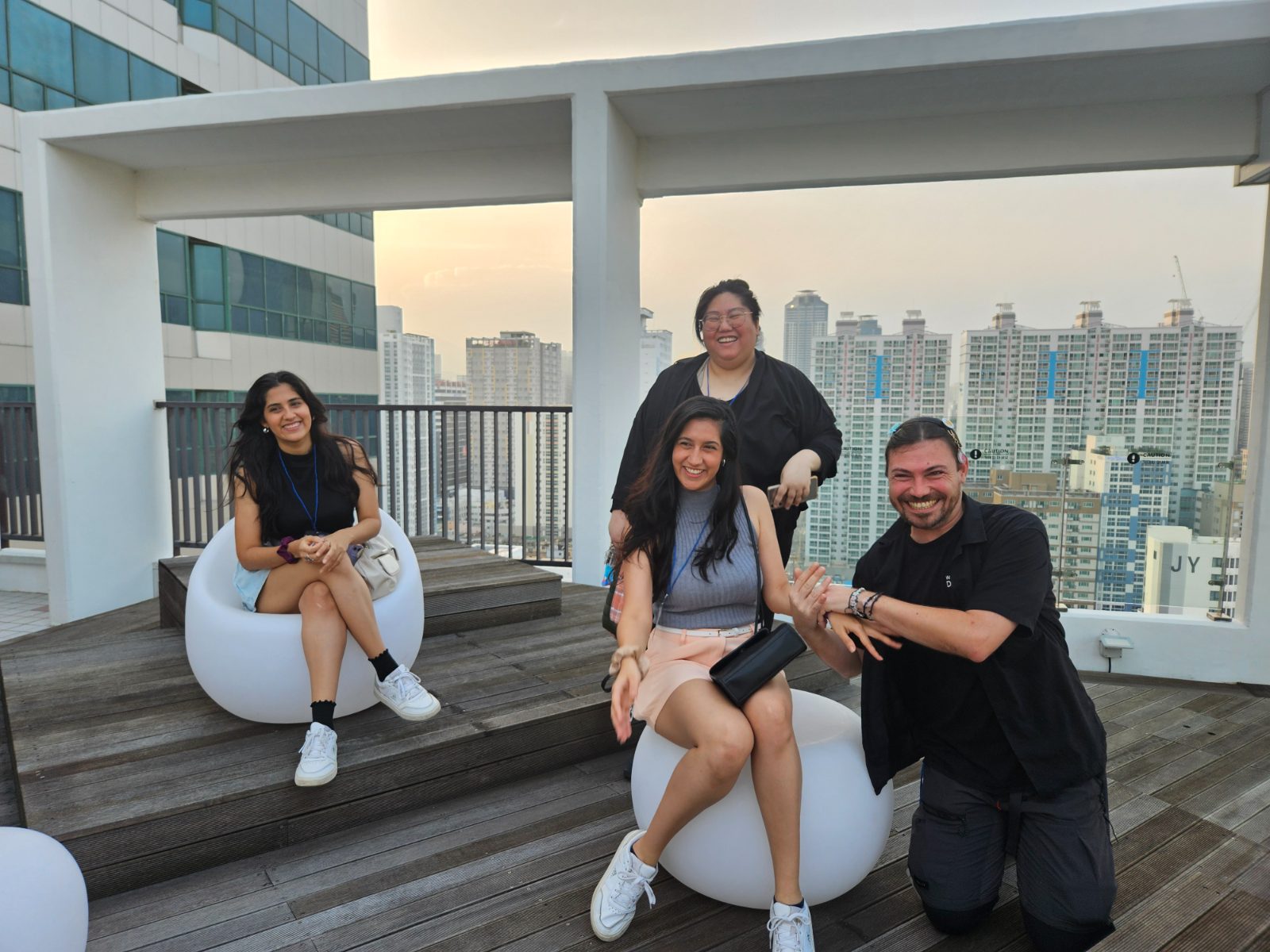
For a summer trip, location matters more than usual. You want a place that makes it easy to retreat from the heat, jump on the subway, and do laundry. A base near a Line 1 and Line 2 hub like Seomyeon covers most of the city by subway: Busan Station, Gwangalli and Haeundae are all easy rides away, and several of the indoor options above are close by.
One place that fits that pattern is Kimchee Busan Guesthouse, run by the same people behind kimchee.live. It is in Beomcheon-dong, about a one-minute walk from Beomnaegol Station on Line 1, and Seomyeon is one subway stop away (or a walkable distance). It has a shared kitchen, a shared lounge, a laundry room, personal lockers and Wi-Fi, which is useful in a humid month when you may want to wash clothes and cook something simple on a rainy evening. Rooms include private rooms and dorms. Check-in is from 16:00 and check-out is at 12:00. If you arrive early or leave late, ask about luggage storage ahead of time.
Prices change by date, and July–August is a busy period, so search your dates on kimchee.live and check the policy shown on the listing, particularly the cancellation terms, before you book. Payment is by card or PayPal, and the booking is confirmed when payment completes. Afterward, the My Stay page has your check-in information, directions and a way to message the host. You can also review or change your booking in your account, which is handy if a storm forces a change to your schedule.
A few last tips
- Check the weather every morning and again before dinner. Plans in Busan change by the hour in summer.
- Book popular dorm beds and private rooms early for August weekends, which are a peak period.
- Be kind to your dorm mates. Hang wet clothes where they will not drip on someone's bed, and keep damp shoes by the door or in a bag.
- Leave space for a spontaneous afternoon. Some of the best days in a rainy Busan summer are the ones with no plan other than a market, a bowl of noodles and a café with a window.
Looking for more trip ideas? Browse the kimchee.live blog for other Busan notes, or ask fellow travelers about their experiences in the travelers' lounge. Before you go, check opening hours, fares and beach notices on official sources, since those details change from year to year.
Stay with us in Busan
Kimchee Busan Guesthouse is one minute from Beomnaegol Station and a short hop from Seomyeon. Book directly on kimchee.live — your reservation is confirmed the moment you pay.