
Busan Subway Guide for Travelers: Lines, Cards, Airport
A practical Busan subway guide for visitors: which metro lines matter, transit cards, getting from the airport, and late-night transport options.
The short answer
Busan's subway is the easiest way to get around the city, and you'll mostly need just two lines: Line 1 (which runs north-south through the older downtown, Nampo-dong, and up toward Beomnaegol and Dongnae) and Line 2 (which loops out to Haeundae, Gwangalli, and Seomyeon). If you're staying near either of those lines, you can reach almost everything in this guide without a taxi. Buy a rechargeable transit card on day one, and don't overthink the rest — Busan's system is small and forgiving compared to Seoul's.
This is written for people landing in Busan for the first time, not for commuters, so we'll skip the technical stuff and focus on what actually changes your trip: which lines matter, how to pay, how to get in from the airport, and what to do after the trains stop running.
Which lines actually matter for a visitor
Busan has four subway lines plus a couple of extra rail lines, but as a traveler you'll live on two of them.
- Line 1 (orange) — the oldest line, running from Nopo in the north down through Dongnae, Seomyeon, Nampo-dong, and Jagalchi. This is your line for the old downtown, Nampo/Gukje Market, Jagalchi Fish Market, and the area around Beomnaegol station.
- Line 2 (green) — the long loop line that hits Seomyeon, Gwangalli, Centum City, and Haeundae. If beach time and shopping are on your list, you'll use Line 2 a lot.
- Line 3 (yellow) and Line 4 (sky blue) are useful if you're heading to specific spots like Marine City or the inland suburbs, but most short trips won't need them.
- Seomyeon station is the one place where Line 1 and Line 2 cross, and it's also the biggest nightlife and shopping hub in the city — you'll probably pass through it more than once.
There's also the Busan-Gimhae Light Rail, which connects Line 2 near Sasang to Gimhae, and the Donghae Line, a separate commuter rail that runs up the coast toward Songjeong and Ilgwang if you want to get out toward the quieter beaches.
Transit cards: get one, it's not optional
You don't want to be buying single paper tickets for every ride. Pick up a rechargeable transit card — the ones you'll see are usually branded as regional cards like Cashbee or similar rechargeable transport cards, sold at convenience stores near stations and at the airport. Tap on, tap off, and it also works on city buses, which matters more than it sounds because some routes (especially along the coast) are faster by bus than by train.
Fares and top-up amounts change from time to time, so rather than quote numbers here, just check current fares at the station or convenience store when you buy the card — it takes two minutes and saves you guessing with coins.
Getting from Gimhae Airport into the city
Gimhae International Airport is west of the city center, and there are two realistic ways in by public transport. The first is the Busan-Gimhae Light Rail, which connects out from the airport area and links up with Line 2 — this works well if your accommodation is anywhere along the Line 2 corridor (Seomyeon, Gwangalli, Haeundae direction). The second is the airport limousine bus, which runs direct routes into downtown and can be more comfortable if you've got heavy luggage and don't want to change trains.
If you're landing late or just want the simplest option after a long flight, a taxi from Gimhae to most central neighborhoods is a reasonable ride — not cheap, but straightforward, and there's a taxi stand right outside arrivals. Whichever way you go, double-check current transport options and any schedule changes before you land, since airport transit setups get adjusted occasionally.
Late-night options: what happens after the subway stops
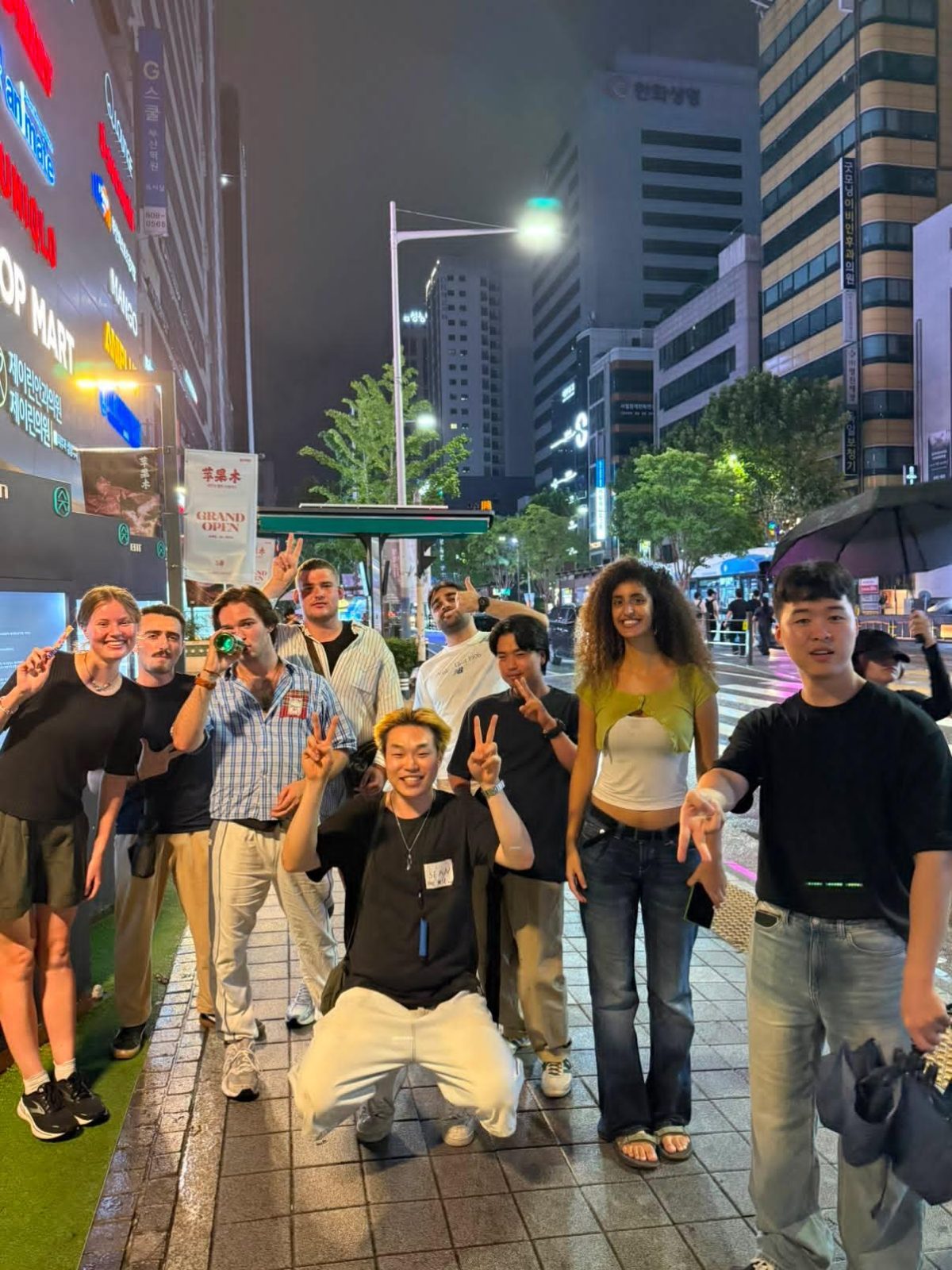
This is the question everyone forgets to ask until they're standing on a platform at 1am. Busan's subway does not run 24 hours — it stops for the night and starts again in the morning, so plan your last train the same way you'd plan a flight connection. If you're out late in Seomyeon, Gwangalli, or Haeundae and miss the last train:
- Night buses run limited routes across the city and are the budget option if your route is covered.
- Taxis are the practical fallback for most late-night trips — Busan taxis are easy to flag down in nightlife areas, and ride-hailing apps also work if you prefer ordering one from your phone.
- If you know you'll be out late, it's worth checking the last-train time for your line before you head out, since it varies a bit by station and direction.
A few things first-timers don't expect
Transfers between Line 1 and Line 2 at Seomyeon involve a bit of walking — wear shoes you don't mind walking in, not just beach sandals. Station signage is bilingual in Korean and English, with station numbers on every sign, so even if you can't read Hangul you can navigate by number (Beomnaegol, for example, sits on Line 1 with its own station number, and it's genuinely one stop from Seomyeon). Seats near the doors are generally left for elderly passengers — it's a small courtesy that's noticed. And during rush hour on weekday mornings, Line 2 through Seomyeon and Line 1 through Dongnae get properly crowded, so if you have flexibility, travel outside that window.
Where we fit into this
We run Kimchee Busan Guesthouse in Beomnaegol, right by the Line 1 station of the same name — it's one stop from Seomyeon, so guests use exactly the routes described above to reach Nampo-dong, Gwangalli, or Haeundae without much thinking involved. If you book through the listing, your confirmation and check-in details land on the My Stay page, and you can always pull up your booking again through your account.
If you're still comparing neighborhoods before you book anything, browsing by area on kimchee.live/find is a decent way to see what's near which subway line. And if you want route tips or current on-the-ground info from other travelers — last-train times, which exits to use, that kind of thing — the traveler's lounge is worth a scan before your trip. For more transport and city-planning notes like this one, there's more on the blog.
The practical takeaway
Get a rechargeable transit card at the airport or your first convenience store, learn the difference between Line 1 and Line 2, and know your last-train time before you go out at night. Everything else in Busan — the beaches, the markets, the nightlife in Seomyeon — is genuinely just a subway ride away once those three things are sorted.
Stay with us in Busan
Kimchee Busan Guesthouse is one minute from Beomnaegol Station and a short hop from Seomyeon. Book directly on kimchee.live — your reservation is confirmed the moment you pay.