
What to Eat in Seomyeon: Gukbap, Milmyeon, Pojangmacha
A practical guide to what to eat in Seomyeon, Busan: dwaeji gukbap, milmyeon, and pojangmacha stalls, plus how to order without speaking Korean.
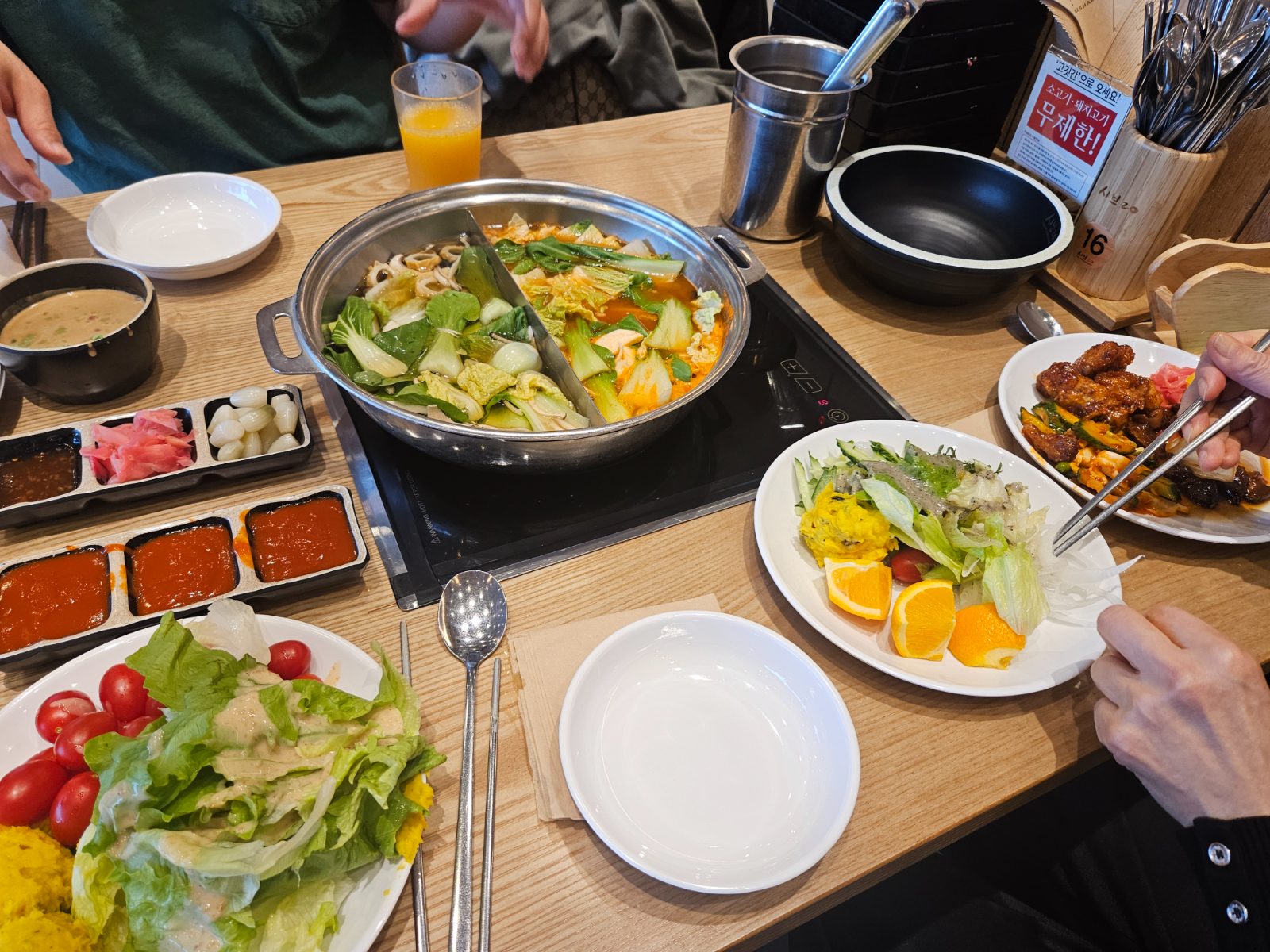
What to eat in Seomyeon, straight up
If you only have one meal near Seomyeon, make it dwaeji gukbap - pork bone and pork slice soup in a milky broth, served over rice, eaten with a spoon like most soups in Busan. Add milmyeon (chewy wheat noodles in a cold, slightly spicy broth) if it is warm out, and save the pojangmacha tent stalls for after the shops close, when you want something grilled or fried with a cold drink. None of this needs Korean. You just need to know what to point at and how to signal what you want, and that is what this guide is for.
Dwaeji gukbap: the dish Busan is actually known for
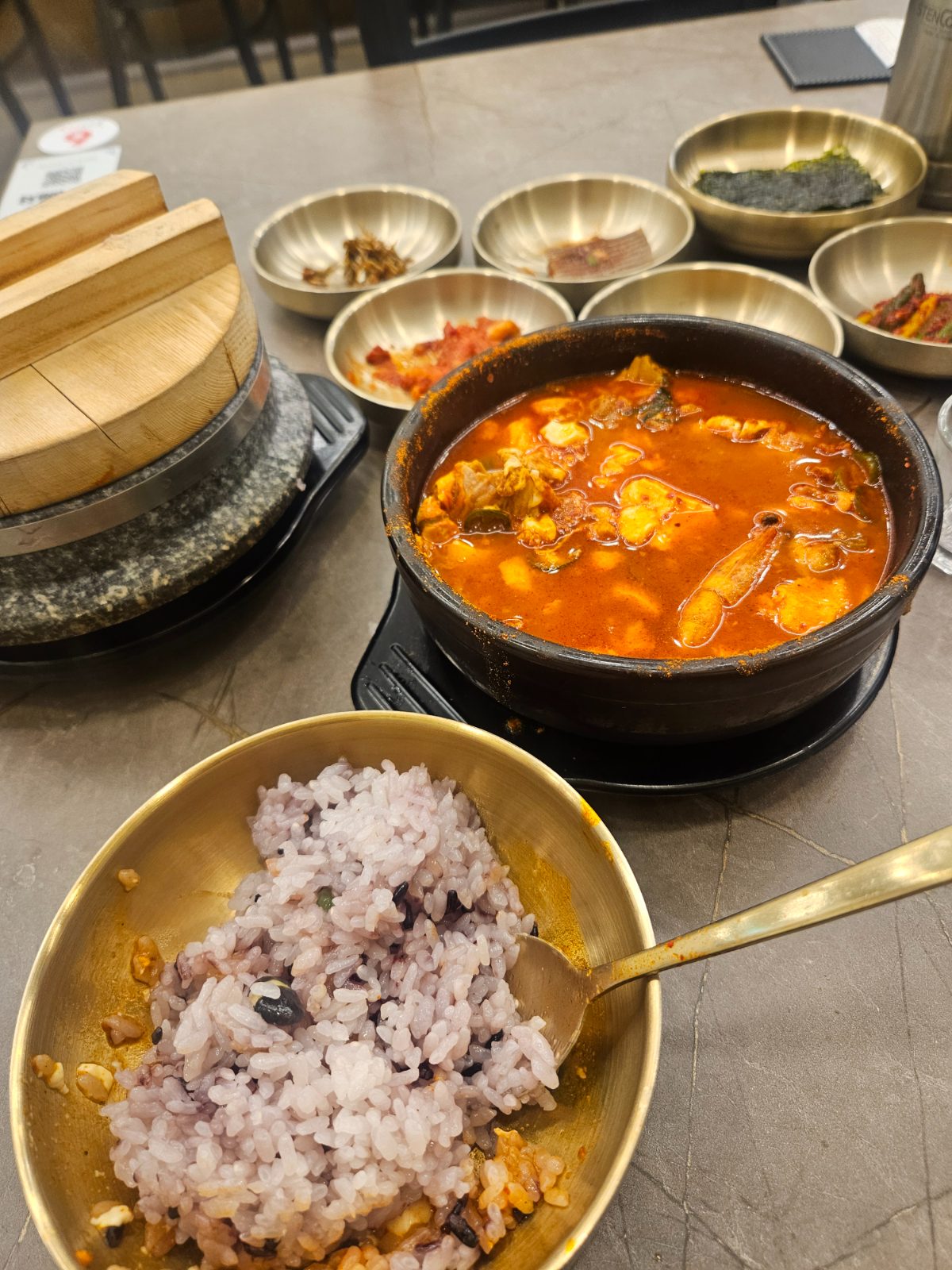
Dwaeji gukbap is a Busan specialty rather than something you will find everywhere in Korea. It is pork bone broth, simmered until it turns cloudy and rich, with slices of boiled pork over rice, either mixed into the soup or kept separate depending on the shop. You will usually get a small plate of raw garlic, green chili, and salted shrimp on the side. The shrimp goes into the broth for extra salt, not on the meat.
Ordering is easy around Seomyeon and nearby Beomnaegol because most gukbap shops have a short menu, sometimes with a picture card at the table. If there is no English, pointing at the word on the menu and holding up one finger almost always works, since the soup is often the only real choice anyway. A few names you might see on the wall:
- Dwaeji-gukbap - the standard pork version
- Sundae-gukbap - with Korean blood sausage mixed in
- Naejang-gukbap - with pork organs, for the more adventurous eater
You can also ask for the soup and rice served separately instead of mixed, but do not worry about the exact phrase. Pointing gets you fed. Prices and opening hours vary by shop and change over time, so if you are timing a meal around a specific hour, it is worth checking before you head out, especially for the small family-run places that sometimes close for a break mid-afternoon.
Milmyeon: Busan's answer to a hot day
Milmyeon is wheat noodles in a cold broth, usually beef or a mixed stock, topped with half a boiled egg, cucumber, and thin slices of meat. It is spicier and more vinegar-forward than the cold noodles you might have tried elsewhere in Korea, and locals treat it as a warm-weather lunch, so expect a short wait at the well-known spots on a hot afternoon. Some shops list a mild and a spicy version side by side on the menu. If you do not want the heat, point at whichever bowl looks less red in the photo.
Milmyeon often shares a menu with suyuk, thin slices of boiled pork served on their own plate. Ordering both to split between two people is completely normal, and honestly a better meal than noodles alone, which can feel a little light by themselves.
Pojangmacha and late-night eating around Seomyeon
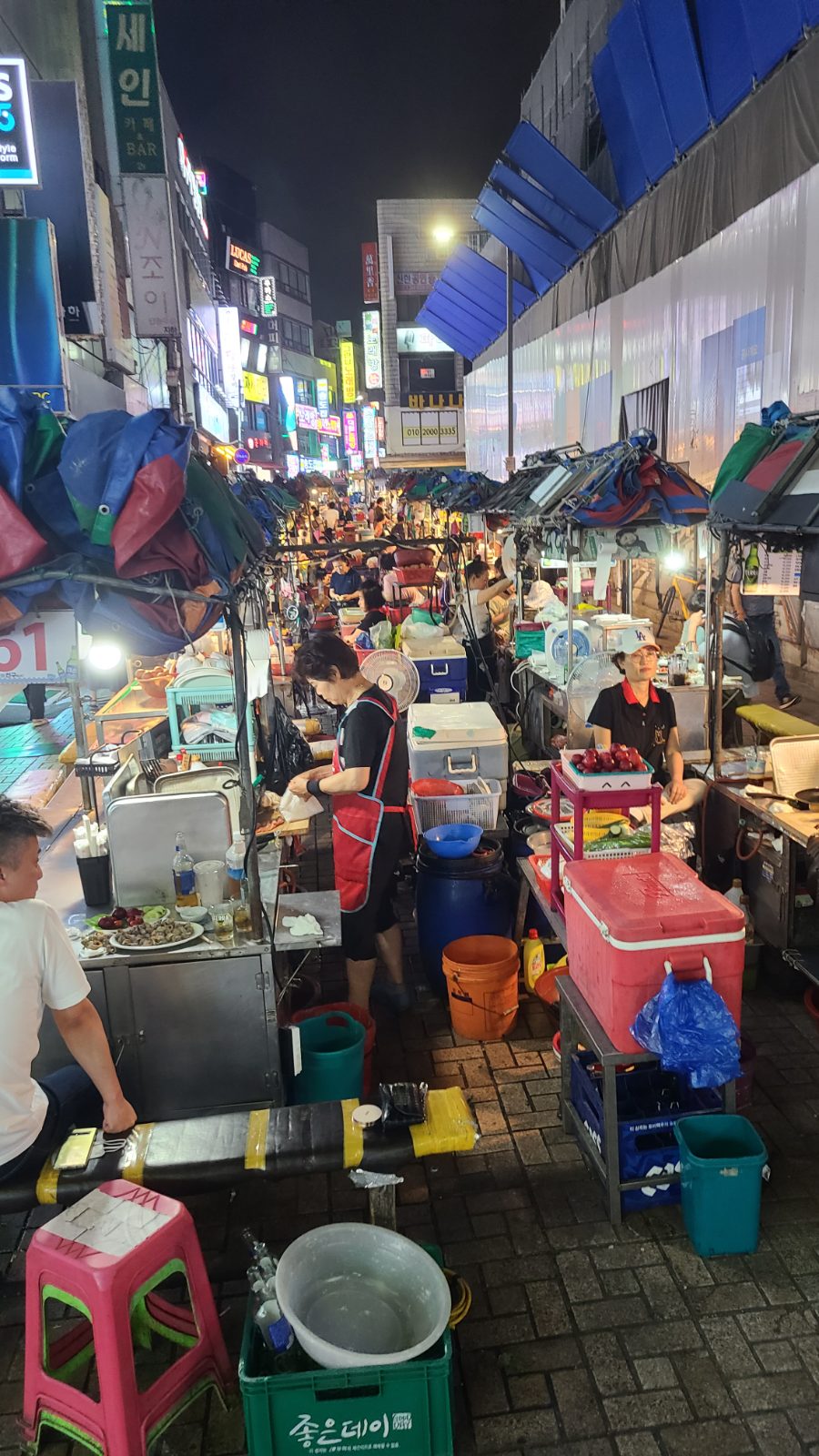
Once the sun goes down, Seomyeon becomes one of the livelier late-night food areas in this part of Busan, thanks to the nightlife around the main strip. Pojangmacha are the orange-tent street stalls. Some are simple standing bars with skewers and soju, others are closer to full outdoor restaurants with plastic tables and gas burners. A few things worth ordering:
- Eomuk / odeng - fish cake skewers simmered in broth, usually self-serve with a cup of the hot broth on the side
- Tteokbokki - stir-fried rice cakes in a red chili sauce, often sold alongside the fish cakes
- Gejang or grilled skewers - varies stall to stall, so it helps to just look at what is sizzling on the grill and point
- Sundae - Korean blood sausage, usually served sliced with a salt-and-pepper dip on the side
Pojangmacha do not usually have English menus, and a lot of the ordering happens by pointing at a tray of prepared food or at whatever is on the grill. Prices at these stalls are typically per skewer or per plate rather than a fixed set menu, and they change from stall to stall, so it is normal to ask the price before you order if you are not sure. Most stall owners are used to travelers doing exactly this.
How to order without speaking Korean
A few habits make eating around Seomyeon much easier if you do not read Korean:
- Learn to recognize the shape of the words for gukbap, milmyeon, and tteokbokki rather than trying to pronounce them. Many menus repeat the same few characters, so once you can spot the pattern you can order confidently.
- Point at the menu, not just at the air. Most small restaurants are used to travelers doing this and will confirm with a nod or a raised finger for quantity.
- Translation apps with a camera function work well on printed menus, less well on handwritten boards, which is common at pojangmacha stalls.
- If a place has photos on the wall or on a laminated card, that is usually your easiest option regardless of the language barrier.
- Side dishes (banchan) at gukbap shops are often self-serve or come automatically. You do not need to order them separately.
Where this fits with a Seomyeon stay
Seomyeon itself is a shopping and nightlife hub, and a lot of travelers base themselves nearby rather than directly on the main strip, since it can get loud late at night. One option is Beomnaegol, one subway stop from Seomyeon on Line 1, which puts you close enough to walk or take a short train ride into Seomyeon for dinner and drinks, then head back to somewhere quieter to sleep. Kimchee Busan Guesthouse is right by Beomnaegol station, a one-minute walk out, and it is one of the direct-booking stays listed on kimchee.live if you want to compare dates and room types for that area.
If you are still figuring out which part of the city to base yourself in for a food-focused trip, our stay finder lets you filter by neighborhood, and the traveler lounge is a decent place to ask other visitors what they ate that week, since food trends around Seomyeon shift a bit by season. Once you have a booking, your confirmation, directions, and check-in details all live in one place under My Stay, which is worth bookmarking before you land.
A rough plan for a food-focused evening
- Late afternoon: a bowl of milmyeon if it is warm, or dwaeji gukbap any time of year, at one of the shops around Seomyeon or Beomnaegol.
- Evening: wander the Seomyeon shopping streets, which is also where a lot of casual Korean chains and cafes cluster if you want something lighter later.
- Late night: pojangmacha tents near the main strip for fish cakes, tteokbokki, and skewers, ideally after the dinner crowd has thinned out a little.
None of this requires planning a route in advance. Seomyeon is compact enough that you can walk between all three without needing a map, and the smell of grilling skewers after dark is usually a good enough guide on its own.
Stay with us in Busan
Kimchee Busan Guesthouse is one minute from Beomnaegol Station and a short hop from Seomyeon. Book directly on kimchee.live — your reservation is confirmed the moment you pay.